Substrates
Standing seam roofs can be installed on a vented cold substrate or a non vented warm substrate.
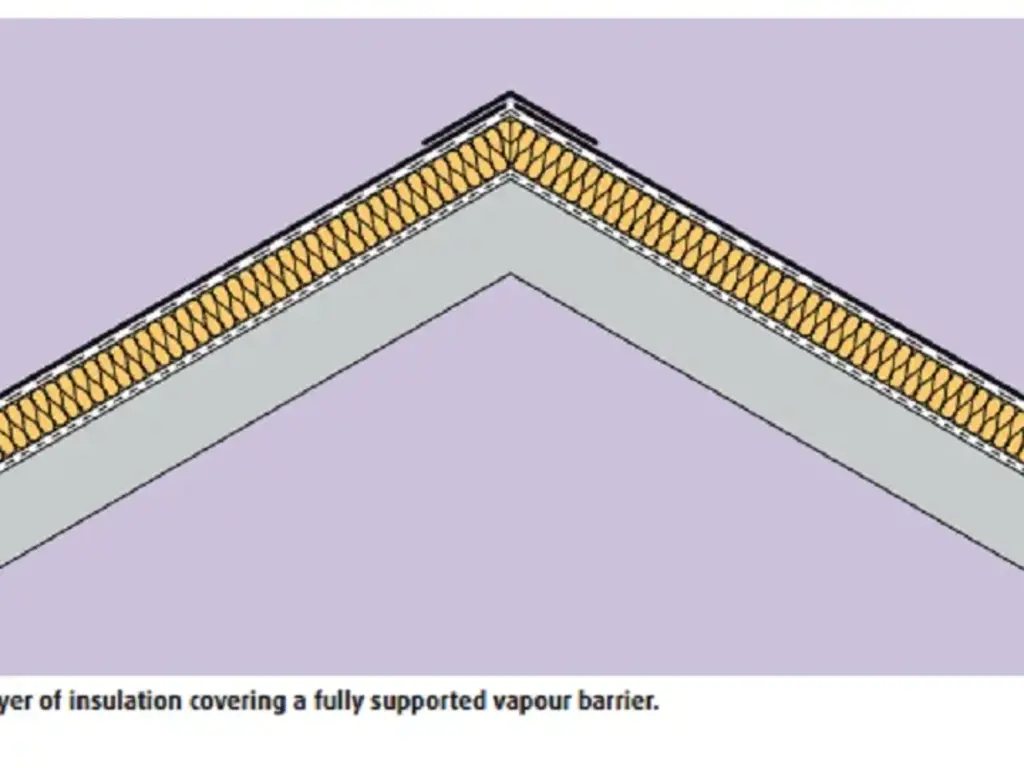
Warm non-vented roofs
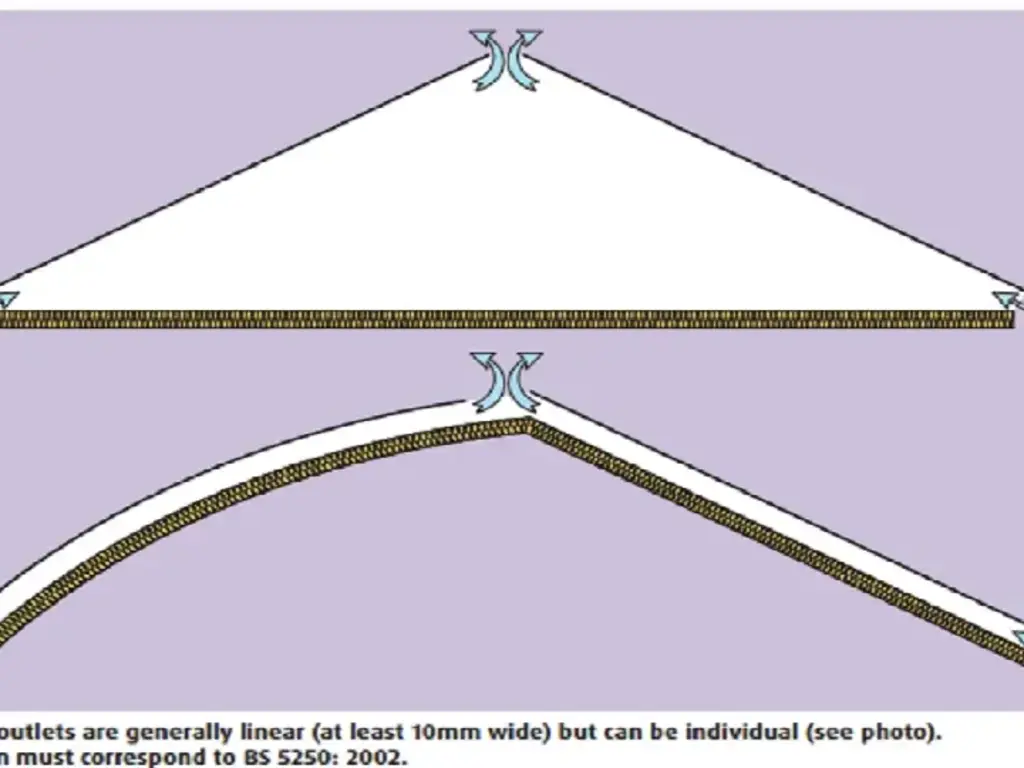
Cold vented roofs
Advantages
This type of construction reduces thermal bridges and increases air tightness whilst still offering BBA certification and a BRE EN 15804 EPD.
Advantages
Traditional construction which has a long history and is covered by a Code of Practice 143-5:1964 and BS EN 501:1994. This type of build up can be used on roofs ranging from 3º to vertical as well as soffits.
Definition in the UK
Warm non-ventilated and cold ventilated roofs are two terms which do not always denote the same ideas to all building professionals. In order to put the warm non-ventilated roof system into context, we will refer to it as a roof where there is absolutely no vented space within the roof build-up and furthermore the entire roof structure is on the warm side of the insulation. In the UK this means that the roof structure is entirely below the insulation.
Definition in the UK
Cold ventilated roofs and warm non-ventilated roofs are two terms which do not always denote the same ideas to all building professionals. In order to put the cold ventilated roof system into context, we will refer to it as a roof where there is a continuous air space of at least 50mm between the substrate supporting the zinc and the insulation. This air space must be a vented space with openings generally at the eaves and the ridge. Linear air vents must be at least 10mm wide and are commonly protected by insect mesh. It is always good practice to include a vapour control layer in the build up and this should be installed on the warm side of the insulation.
Elements of the system
- Zinc PLUS must be used on all warm roof build-ups.
- VMZINC Membrane must be used (breather membrane)
- The substrate must be continuous and even and the correct fixing clips must be used.
- Aludex Max vapour barrier must be used and correctly installed. This is a bitumen-backed aluminium foil vapour barrier that must be fully supported and must cover the complete surface of the roof.
Elements of the system
- Zinc PLUS must be used on plywood whereas VMZINC is acceptable on open-gap timber boards.
- VMZINC Membrane can be used to protect the insulation.
- The substrate must be continuous and even, and the correct fixing clips must be used.